

Journal
Best Time to Surf in Agadir: A Month-by-Month Guide
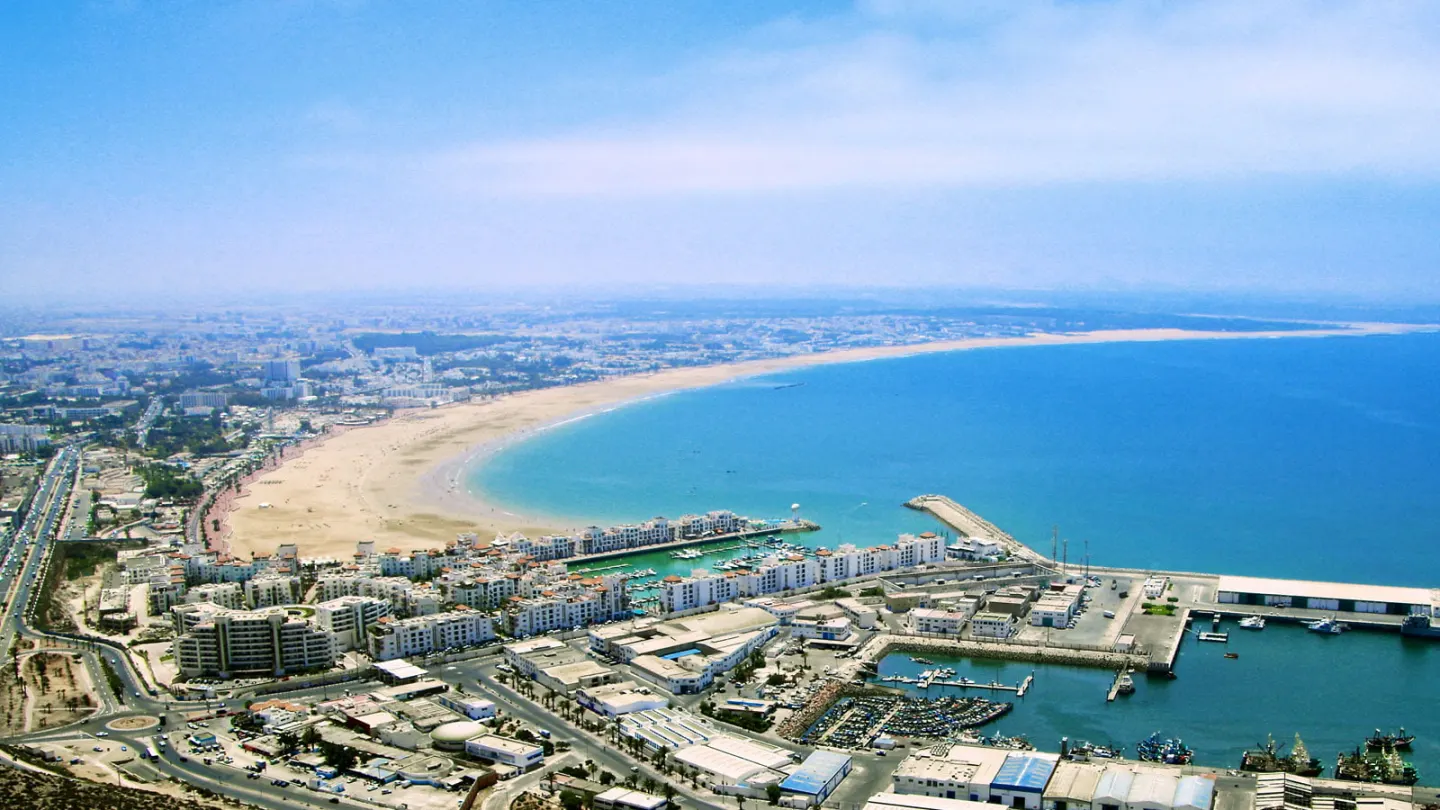
Agadir sits on a wide, south-facing bay on Morocco's Atlantic coast, and that geography is the short answer to when you should come: the bay is sheltered, the beach is sand, and there is something rideable in it almost every week of the year. The longer answer depends on whether you are learning, improving, or chasing the biggest days.
The very short version
If you have never surfed before, or you are bringing children, the calmest and warmest window is May to September. If you already surf and you want size and long rides at the points north of town, come October to March. April and October are the two months that tend to give you a bit of both.
Autumn: September to November
Autumn is the month range most surfers name if you push them for one answer. The first proper North Atlantic groundswells start arriving from late September, the water is still at its warmest of the year, and the summer holiday crowds have gone home. Mornings are typically light-winded, which is when the bay is at its cleanest.
For a beginner this is close to ideal: waves with enough push to actually carry you, without the winter size, and water you can stay in for two hours without thinking about the cold.
Winter: December to February
Winter is the season of the big, organised swells that made this stretch of coast famous. The points north of Agadir — Taghazout is about twenty kilometres up the road, half an hour in the van — turn on properly, and on the right day the rides are long enough to make your legs burn.
Beginners are not shut out. The bay in front of Agadir keeps working when the points are too big, because the same swell arrives at a friendlier angle and breaks over sand. That is exactly why lessons run here through the winter. It is the coldest water of the year, roughly 16 to 19°C, so a proper wetsuit matters — ours is included with every lesson.
Spring: March to May
Spring is the quiet season and, for a lot of people, the best value. The last of the winter swells keep coming through March and into April, the water starts climbing again, and the beach is empty on weekday mornings. Wind picks up through the afternoons as the season goes on, which is a good argument for booking a morning session.
Summer: June to August
Summer is small, warm and busy. The swell drops, the bay goes glassy for long stretches, and the water is at its most forgiving. It is the least intimidating time of year to stand up on a board for the first time, and it is when families come. The trade-off is crowds on the beach and afternoon wind, so early sessions win.
Month by month, at a glance
- January and February — biggest, cleanest swells; coldest water of the year; quiet beaches.
- March and April — swell easing, water warming, very few people.
- May and June — small and friendly, long calm mornings.
- July and August — warmest water, smallest waves, busiest beach; book early sessions.
- September and October — the sweet spot: warm water, the first real swells, thinning crowds.
- November and December — winter arriving; big days at the points, the bay still very learnable.
What time of day to book
Whatever the month, mornings are usually cleaner. The wind on this coast tends to build through the afternoon, so a 9am or 10am session is more often than not the better wave. If you are here for several days, book mornings and keep the afternoons for the beach.
How long you actually need
For a first session we recommend two hours rather than one. The first twenty minutes go on the beach — where to lie on the board, how to pop up, where not to be — and the difference between forty minutes in the water and ninety is the difference between one or two waves and enough repetition that your body starts to remember it.
If you have three or five days here, the multi-day packs are built for exactly that: consecutive two-hour sessions, so each one starts where the last one stopped rather than from scratch.
What the wind does, and why it decides your day
Swell gets all the attention, but on this coast the wind is what most often decides whether a morning is good or average. The pattern through most of the year is the same: light or offshore early, building onshore through the middle of the day, easing again late. Offshore wind holds the wave up and makes it cleaner; onshore wind pushes it over and turns the bay choppy.
This is why local surfers here are early risers, and why every piece of advice on this page comes back to booking a morning. It is also why a forecast that shows a smaller swell with light wind is usually a better day than a big swell with twenty knots on it.
Crowds, and the months nobody talks about
July and August are the busiest weeks on the beach, driven by holidays rather than by waves. Late April, May, early June and the whole of November are the quietest stretches of the year with genuinely good conditions, and they get almost no attention in guides. If your dates are flexible and you want space in the water, look there first.
Ramadan and public holidays
Ramadan moves through the calendar each year, and during it the rhythm of the day in Agadir shifts — quieter mornings, much livelier evenings. Surfing is unaffected and lessons run as normal; it is worth knowing mainly for restaurant hours and traffic.
How to choose your dates in practice
- Want the warmest water and the easiest waves — July to September.
- Want the best all-round conditions — late September through October.
- Want size, and you can already surf — December to February.
- Want an empty beach — May, or November.
- Travelling with children — May to September, mornings.
Common questions
What is the best month to surf in Agadir?
September and October are the strongest all-round months: the water is at its warmest, the first proper Atlantic swells have started, and the summer crowds have gone. For a first ever lesson, May to September is the calmest and warmest window.
Can beginners surf in Agadir in winter?
Yes. The bay in front of Agadir breaks over sand and keeps working when the points north of town are too big, which is why lessons run all winter. The water sits around 16 to 19°C, so a wetsuit is essential — one is included with every lesson.
Is there surf in Agadir in summer?
Yes, but it is small. Summer is the gentlest and warmest time of year, which makes it the least intimidating season to learn. Book a morning session — the wind usually builds through the afternoon.