

Journal
Surfing in Agadir in Winter: What to Expect
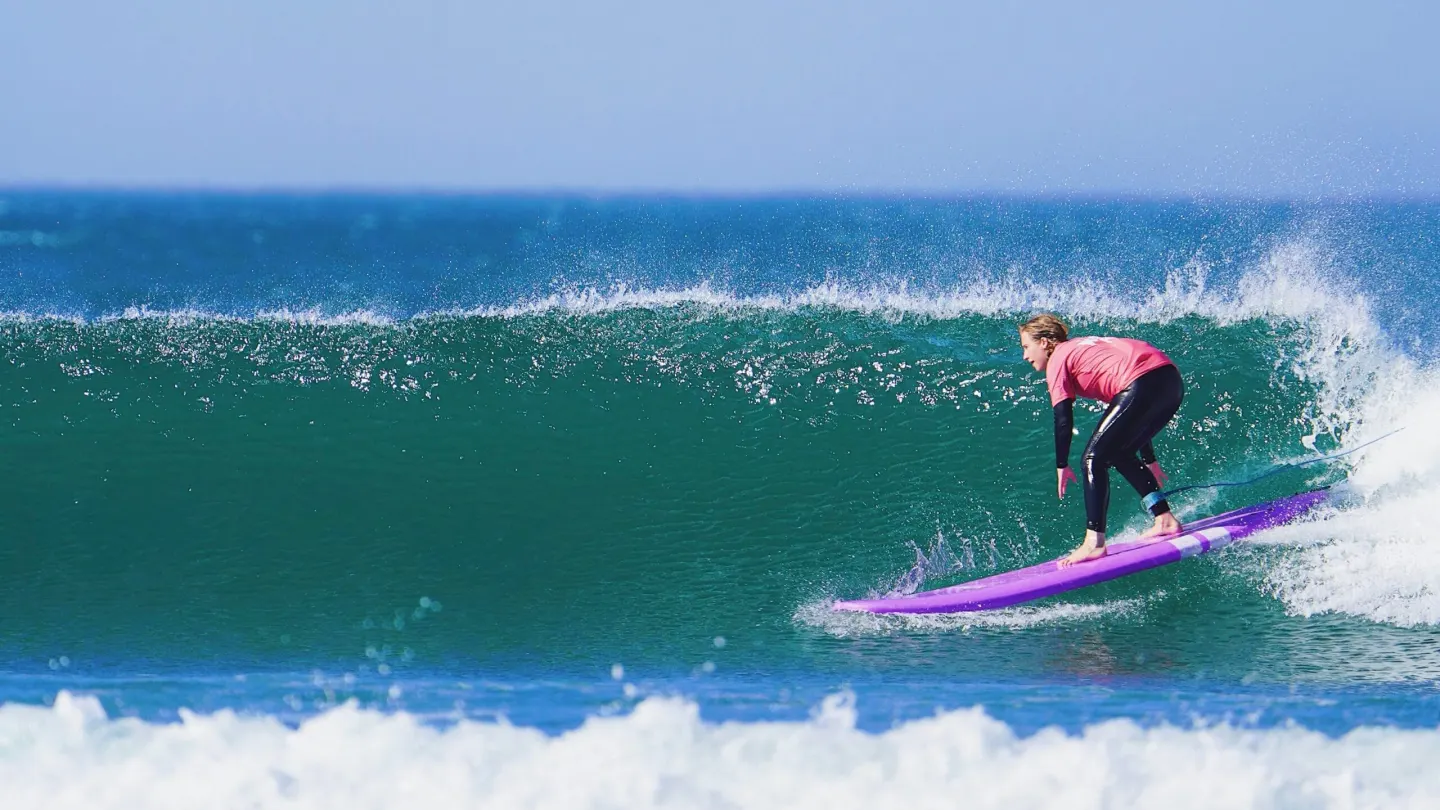
Winter is when this coast does what it is famous for. It is also the season people ask the most nervous questions about, usually some version of: is it too cold, and is it too big for me? Short answers: no, and no — but pack for it.
The waves
From December through February the North Atlantic sends its most organised swells down to Morocco. The points north of Agadir come alive, and on the best days they produce the long, peeling rides that put Taghazout on the map.
Agadir's own bay behaves differently, and that is the whole point of it in winter. It faces south-west into a sheltered bay and breaks over sand, so the same swell that turns the points into an expert's playground arrives here at a size and shape you can still learn in. That is why our lessons run through the winter without interruption.
The water
Winter is the coldest water of the year — roughly 16 to 19°C, with February usually the coolest. That is cool, not cold: a 3/2mm wetsuit is the standard choice and a 4/3mm is comfortable if you feel the cold. You do not need boots, gloves or a hood.
A wetsuit is included with every lesson, so there is nothing to buy or carry. If you are surfing on your own, our rentals include a wetsuit alongside the board.
The weather on land
This is the part that surprises people. Agadir in winter is mild and dry — sun most days, cool mornings and evenings, warm enough at midday to sit outside in a t-shirt. It is one of the reasons Europeans keep flying here in January. Bring a jumper for after the session; the wind off the water bites more than the air temperature suggests.
Can a complete beginner learn in winter?
Yes, and it is a good time to do it. The beach is quiet, the water is uncrowded, and the swell has enough push in it that you get carried properly rather than having to fight for momentum. What matters much more than the season is the format of the lesson. For a first session we recommend two hours rather than one, so that the beach briefing does not eat your water time.
If you are nervous, or the person you are bringing is, a semi-private lesson for two to four people or a one-to-one private lesson means a correction on every wave instead of every few minutes — and both include a photographer at no extra cost, which is how most people end up with pictures of their first ride.
What to bring
- Warm layers for after the session — a hoodie and something to change into.
- A towel and flip-flops. Showers and lockers are at the base.
- Sunscreen. Winter sun here is stronger than it feels.
- Nothing else. Board, wetsuit and equipment come with the lesson.
Booking around the swell
Morning sessions are usually cleaner in winter as well — the wind builds later in the day. If you are here for several days, the three- and five-day packs run as consecutive two-hour sessions, which is what actually turns a first stand-up into something repeatable.
Which winter days suit which surfer
Not every winter day is the same, and the useful skill is reading which kind of day you have woken up to.
- Small and clean — the best beginner days of the whole year. Enough push to be carried, small enough to be relaxed.
- Solid and clean — the points north are the story; the bay is still very surfable for anyone past their first few sessions.
- Big and messy — the day to take a guided trip and let somebody who surfs this coast daily choose the corner that is working.
Daylight and session times
Winter days here are shorter but not short: it is light well before nine and into the early evening. Combined with the wind building through the afternoon, that makes a mid-morning session the obvious slot — warm enough for the air to have picked up, early enough for the wave to still be clean.
Why people come here in January
Because it is the closest place to northern Europe where you can surf in a 3/2mm, eat outside at lunchtime and not see rain for a fortnight. Three to four hours' flight from most of Europe, no jet lag, and a swell window that runs all season. That combination is rare, and it is the entire reason this coast fills up with surfers in the middle of winter.
Booking ahead in winter
Christmas and New Year are the busiest weeks of the winter, and the semi-private and private slots go first because that is what families and couples want. If you are travelling then, book the session before you book the restaurant.
Common questions
How cold is the sea in Agadir in winter?
Around 16 to 19°C between December and February, with February usually the coolest. A 3/2mm wetsuit is standard and a 4/3mm is comfortable if you feel the cold. A wetsuit is included with every lesson.
Is winter too big for beginners in Agadir?
No. Agadir's bay is sheltered and breaks over sand, so it stays learnable when the points north of town are too big. Lessons run all winter.
What is the weather like in Agadir in winter?
Mild and mostly dry — sunny days, cool mornings and evenings. Bring a warm layer for after the session.